 |
||
|
||

Home > TERATEC FORUM > Workshops > Workshop 3
 |
The essential meeting place for all digital players Simulation . HPC/HPDA . Artificial Intelligence . Quantum Computing |
Workshop 03 - 4:00 pm to 6:00 pm |
Chaired by Mathilde Mougeot, Professeure des Universités, ensIIE & ENS Paris-Saclay and Vivien Clauzon, Principal numerical scientist HPC, Michelin
Reinventing Simulation with AI: From High-Performance Computing to Real-Time Engineering
By Laurent Di Valentin, Senior Fellow Vehicle CAE, Stellantis
 |
|
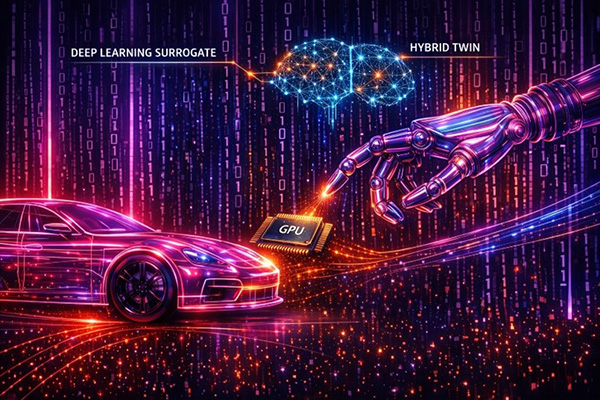
The integration of artificial intelligence into engineering processes has become a major transformation lever for the automotive industry, which is facing increasing complexity, stricter regulatory constraints, and ever-shorter development cycles. In this context, numerical simulation is undergoing a profound evolution, shifting from traditional approaches to hybrid workflows that combine high-performance computing with AI-based models. This talk will share concrete industrial feedback on this ongoing transformation. Two key pillars will be highlighted. The first focuses on accelerating simulation loops through deep learning surrogate models, enabling a drastic reduction in computation time, from several hours on HPC systems to a few seconds on GPUs. The second addresses improved predictivity through hybrid twin approaches, combining physics-based models with experimental data to enhance robustness and result reliability. These evolutions are driving a fundamental shift in how computing resources are used: increased reliance on HPC upstream for model training, followed by much more agile and distributed usage downstream, empowering engineers in their day-to-day work. Finally, we will discuss the emergence of foundation models for engineering, paving the way for shared training efforts and enabling scalable industrial deployment of AI in CAE processes. This evolution marks a major transition—from heavy, sequential simulation workflows to augmented engineering that is faster, more predictive, and more collaborative. |
|
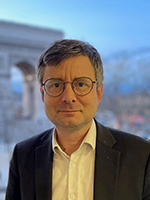 |
Biography: Graduated from Ecole Centrale Paris in 1996 (Master’s degree in Structure and Coupling Dynamics), he entered in PSA in 1997 to develop new CAE methods for crash. After 10 years of CAE team management, he became CAE expert, then CAE Senior Fellow in 2016 in PSA, and in Stellantis in 2021 to coordinate the global CAE expertise network covering 3D modeling, system modelling & simulation and AI technologies for CAE. He is President of the Virtual&Testing Expertise Community in the SIA (French automotive association) and Chairman of Digitalization Expert Group in FISITA (International Federation of Automotive Engineering Societies.) |

To participate in this workshop, please register on the Teratec 2026 Forum website >>>>