Home > TERATEC FORUM >Workshops

TERATEC 2026 Forum
The essential meeting place for all digital players
Simulation . HPC/HPDA . Artificial Intelligence . Quantum Computing
Wednesday October 21
Workshop 05 - 9:00 am to 11:00 am
Smart Cities and Regions: The Role of AI, from Models to the Frontiers of Physics and High-Performance Computing
Chaired by Paco Chinesta, Professeur des universités, ENSAM and Dominique Baillargeat, Scientific executive director, CNRS&CREATE

How are Digital Twins used for 5G/6G communication?
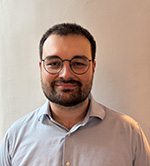
Michael Dieudonné, R&D Department Manager, Keysight

Artificial Intelligence is expected to play a central role in future 5G-Advanced and 6G systems. Its applications range from energy optimisation and transceiver simplification to enhanced adaptability, automation, and sensing-enabled services such as JCAS/ISAC. However, mobile networks are critical infrastructures, where reliability, robustness, and trustworthiness must remain extremely high. Deploying AI-based functions directly into live networks without realistic validation may therefore introduce significant operational risks.

At the same time, AI-enabled networks will generate, process, and act upon very large volumes of data, especially at the edge. If not properly managed, this data burden may become comparable to, or even exceed, the user-plane traffic itself.

Digital Twins are emerging as a key approach to address these challenges in 5G and 6G network development. They can provide realistic, flexible, and scalable environments for testing AI algorithms before deployment.

They can also support continuous validation by comparing expected and actual network behaviour during operation.

In this talk, we will discuss how Digital Twins can be applied in the telecommunications domain, from pre-launch validation to performance monitoring and optimisation.
We will present examples covering different network layers, use cases, and levels of abstraction.

The talk will also highlight the limitations of Digital Twin approaches, including modelling accuracy, scalability, data availability, and real-time constraints.
Particular attention will be given to the need for multiple levels of Digital Twins, adapted to different problem scales and validation objectives.

The examples and results presented are based on investigations carried out with network operators and equipment vendors in several European-funded research projects.

The talk will conclude with perspectives on how Digital Twins may become a cornerstone for trustworthy AI deployment in future 5G/6G networks.

Biography: Michael Dieudonné is currently an R&D Department Manager for the 6G program and manages Keysight’s relationship with EC and local authorities in Europe. He currently coordinates the 6G-SANDBOX SNS-JU project and is a member of the 6G-IA Board, the 6G Industry Association. He supervises research performed in different domains around B5G/6G wireless, network test, and high-frequency metrology.
Over the years he initiated and led different R&D initiatives such as test automation (with the launch of OpenTAP.io, the first open source project from Keysight), Open Radio Access Network (ORAN) test, the Internet of Things (IoT) test and battery test.
He has been active in various international cooperative projects, such as the EURAMET EMPIR MET5G Project (on 5G EMF), coordinated European Union (EU) SAMURAI Project defining early day multiple input multiple output (MIMO) techniques for 4G systems, and European Union-Horizon 2020 (EU-H2020) Triangle (test of application in a 5G context).
Education: Michael Dieudonné holds an MsC in Micro-electronics, Digital Design (De Nayer Institute now part of the KULeuven) and an MBA from the Vlerick Business school accredited by all three major international quality assessment bodies: EQUIS, AMBA and AACSB.
Michael Dieudonné publications can be found on ORCID https://orcid.org/0000-0002-8134-4029

To participate in this workshop, please register on the Teratec 2026 Forum website >>>>


© Ter@tec - All rights reserved - Lawful mention